
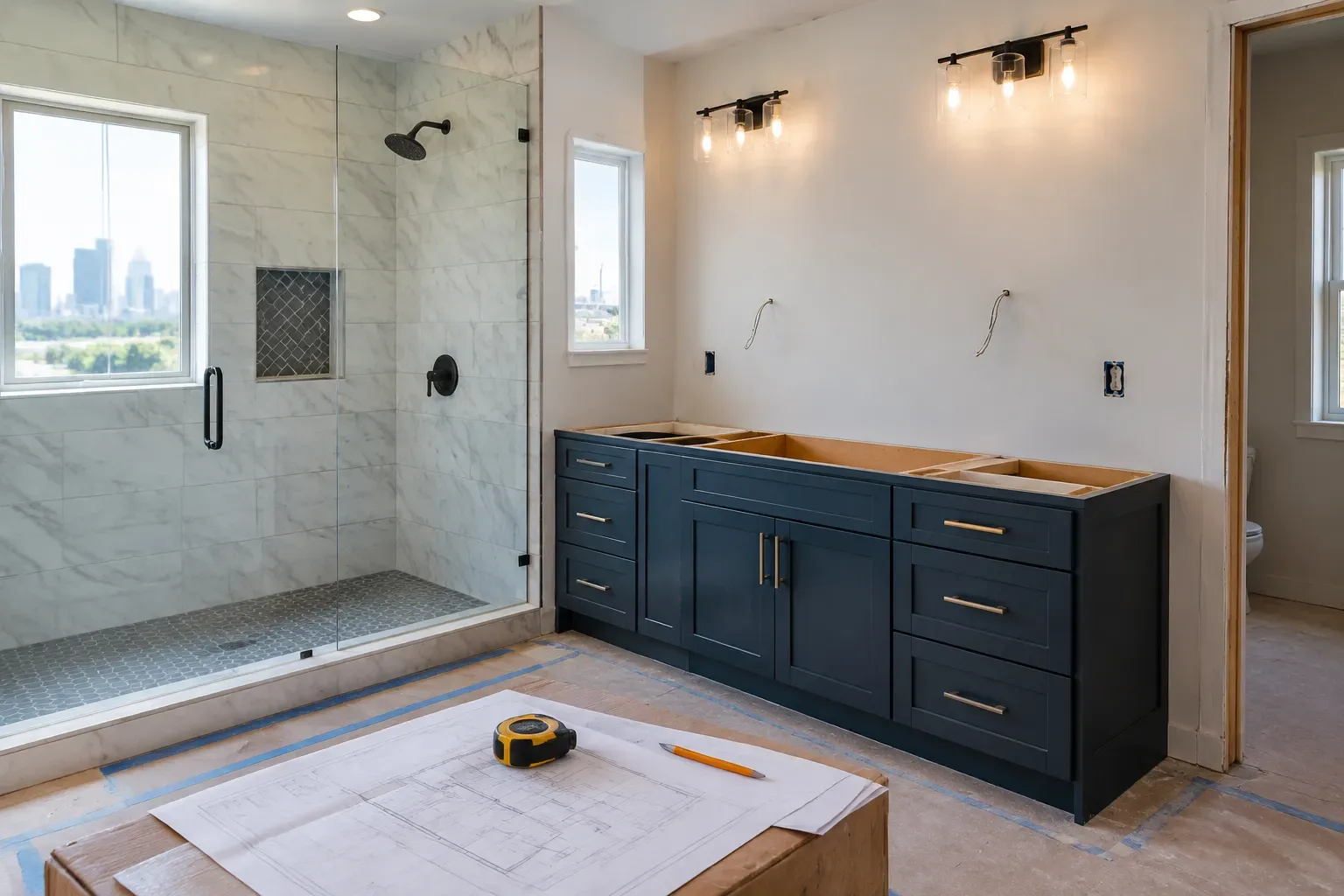
How Long Does a Bathroom Remodel Take?
A bathroom remodel does not have one responsible, universal completion date. The real timeline depends on whether the work is a surface-level refresh or a full renovation involving demolition, plumbing or electrical changes, waterproofing, inspections, custom materials, and repairs found after walls or flooring are opened.
For Houston-area households, the most useful answer is a project-specific schedule built after the layout, material selections, permit needs, and existing conditions are reviewed. Dawn Designs Texas can help homeowners turn those decisions into a clear scope and written estimate before construction begins.
Quick Answer
A cosmetic update generally has fewer construction steps than a full bathroom gut renovation. Once plumbing locations move, electrical work changes, tile surrounds a shower, or hidden moisture damage appears, the schedule gains more trade coordination, inspection points, cure time, and potential corrective work.
The construction phase is only part of the calendar. Design decisions, product ordering, permit review where required, and scheduling inspections should be addressed before demolition. A contractor should provide a project-specific projected sequence rather than promise the same duration for every bathroom.
What scope of work changes the timeline most?
| Remodel scope | Typical work included | Timeline pressure points | Best fit |
|---|---|---|---|
| Cosmetic refresh | Paint, lighting, hardware, mirror, faucet, or similar surface updates | Product availability and access to the room | A functional space that needs an appearance update |
| Standard renovation | New vanity, flooring, fixtures, tile, and selective plumbing or electrical work | Fixture coordination, wall repair, waterproofing, tile installation, and inspections where required | An outdated bathroom with a workable existing layout |
| Full gut renovation | Demolition to framing, relocated fixtures, new plumbing or electrical, shower rebuild, waterproofing, tile, and finish work | Permit process, rough inspections, hidden conditions, specialty materials, shower glass, and product-specific cure times | A bathroom needing a complete layout or systems upgrade |
Keeping the existing toilet, shower, and vanity locations can reduce the amount of plumbing and electrical coordination. That does not mean every existing layout is worth preserving. If a layout creates poor storage, unsafe access, or a shower that no longer meets the household's needs, changing it may be the better long-term decision.
For a closer look at scope options, see bathroom remodeling services.
What happens before bathroom construction starts?
The schedule starts before anyone removes a tile. A reliable preconstruction phase identifies the layout, confirms material choices, determines whether permits apply, and orders long-lead items before the room is taken out of service.
Custom vanities, specialty tile, plumbing fixtures, shower doors, built-in storage, and lighting can all affect the start date. Ordering after demolition creates avoidable gaps, particularly if a replacement item is delayed or arrives damaged.
In Houston and nearby communities, the applicable permitting process can vary by property jurisdiction. A project in Houston proper may not follow the same submittal, approval, or inspection process as one in Bellaire, Sugar Land, Katy, Pearland, or another municipality. Building, plumbing, and electrical requirements can also determine work sequencing and inspection points, as reflected in the International Code Council's I-Code framework.
What are the main phases of a bathroom remodel?
The exact order changes with the project, but a full renovation commonly moves through these phases:
- Confirm the layout, budget priorities, fixtures, finishes, and access plan for the home.
- Finalize drawings or specifications, identify permit needs, and order selected materials.
- Protect adjacent areas, set up dust control, and remove existing finishes or fixtures.
- Inspect exposed framing, plumbing, wiring, and subflooring, then address conditions that need correction.
- Complete rough plumbing, electrical, ventilation, framing, and any required inspections.
- Repair walls and floors, build the shower assembly, and complete waterproofing verification before tile covers the work.
- Install tile, flooring, cabinetry, countertops, fixtures, lighting, trim, paint, and shower glass.
- Complete final details, a punch-list review, cleanup, and any required final inspection.
Waterproofing is not simply another finish layer. It is the moisture-management assembly behind tile or other shower finishes, and it should be checked before it is concealed. Tile can look complete while the hidden assembly remains the part that protects surrounding walls and framing.
Why do waterproofing and finish materials add time?
Waterproofing membranes, thinset mortar, grout, sealers, paint, and coatings may need specified dry or cure periods before the next trade proceeds or the room returns to normal use. The correct interval comes from the particular product manufacturer's instructions, not a generic online estimate.
That matters in Houston's humid conditions. Humidity and moisture exposure make ventilation, drying, and careful moisture control especially important in a bathroom. Rushing a finish step can compromise appearance, adhesion, or durability, which creates a much bigger problem than waiting for the right condition.
What can delay a bathroom renovation after demolition?
Demolition reveals conditions that were hidden behind walls, under flooring, or beneath an old shower. A stained ceiling below the bathroom is an observable symptom. Possible causes can include a plumbing leak, failed shower waterproofing, condensation, or another moisture path. Only inspection can confirm which condition is present and what repair belongs in the remodel scope.
Older or previously altered homes may reveal outdated wiring, undersized plumbing, deteriorated subflooring, framing corrections, prior unpermitted alterations, or water damage. Suspected mold or significant moisture damage should be investigated and corrected before new finishes enclose the area. The EPA's mold remediation guidance supports addressing moisture problems before they are covered.
A contractor may coordinate the renovation, but mold remediation, structural engineering, or other specialty work can fall outside a standard bathroom-remodel scope. Ask who will evaluate and handle any condition that requires a separate specialist.
Weather can also affect a mostly indoor project. Heavy rain, tropical weather, and storm-related demand may disrupt material deliveries, inspections, subcontractor availability, or access to the property.
How can you keep a bathroom remodel on schedule?
Most schedule control happens through early decisions and prompt communication. Before work starts, ask who is responsible for permits, inspection scheduling, trade coordination, material receiving, home protection, change orders, and updates if the plan changes.
Homeowners can help by:
- Finalizing major selections before demolition, including tile, vanity, plumbing fixtures, lighting, and shower glass.
- Confirming an alternate bathing plan if the home has only one bathroom.
- Responding promptly to questions about discovered conditions or requested changes.
- Avoiding late layout changes after rough plumbing, electrical, or tile work has begun.
- Keeping agreed site-access arrangements in place for scheduled crews and inspections.
A written, itemized estimate helps clarify what is included before the work begins. Dawn Designs Texas states that it provides written, itemized estimates, manages required permits and inspections, and assigns one project manager to projects. Those coordination points can make it easier to understand what is happening next, even when a hidden condition requires a schedule revision.
If the bathroom work is part of a larger reconfiguration, such as creating a new suite or expanding the home's footprint, the timeline has a different level of complexity than a room-only renovation. Review how additions and ADU construction differ from standard remodeling before assuming those projects follow the same sequence.
Can you use the bathroom during a remodel?
Usually, a bathroom cannot be used normally during demolition, plumbing shutoffs, waterproofing, tile work, fixture installation, or required cure periods. A partial update may preserve limited use at certain stages, but that should be confirmed with the contractor rather than assumed.
For a one-bathroom home, plan the temporary arrangement before work starts. That may mean using another bathroom, arranging a short stay elsewhere, or discussing a phased approach. A phased plan can reduce disruption in some cases, but it can also add setup and coordination steps, so it is not always the fastest choice.
When does a bathroom project need more than a bathroom-remodel plan?
A bathroom can expose broader needs. For example, a cramped layout may be tied to an adjacent closet, bedroom, hallway, or utility area. In that situation, a simple fixture swap may not solve the actual problem.
If the best solution requires expanding the room or creating a new bathroom elsewhere, explore additions and ADU construction options. If the bathroom work is being coordinated with an adjacent cooking area or a wider renovation, kitchen remodeling services can help frame the larger project plan.
The practical takeaway is simple: select the scope and materials first, then rely on a written project sequence that accounts for permits, inspections, trade work, and product-specific curing requirements. For a Houston-area bathroom timeline tailored to your home and planned scope, request an in-home estimate.
Ready to discuss your project?
Request a Houston-area in-home estimate to discuss your bathroom scope, material selections, and a realistic project sequence.
FAQ
How far in advance should I plan a bathroom remodel?
Begin planning before you need the room completed. The preconstruction period should allow time to settle the layout, choose finishes, verify material availability, review permit needs, and arrange temporary bathroom access if necessary. Starting early also gives you time to compare the impact of keeping fixtures in place versus moving plumbing. For planning guidance, read how to plan a bathroom remodel without stress.
Does moving a toilet or shower make a remodel take longer?
It can. Relocating fixtures may require new drain, water, vent, electrical, framing, and inspection coordination. The existing structure and access below or behind the bathroom also affect what is practical. Keeping fixture locations may simplify the work, but it should not override a layout problem that makes the room less useful or creates poor long-term function.
Do I need a permit for a bathroom remodel in Houston?
Permit requirements depend on the work and the jurisdiction where the property is located. Plumbing, electrical, structural, or layout changes are more likely to involve permitting and inspections than a limited cosmetic update. Houston-area municipalities do not necessarily follow one identical administrative process. Confirm who will determine the applicable requirements, submit documents if needed, and schedule inspections.
What is the most common cause of a bathroom remodel taking longer?
Late decisions and hidden conditions are frequent schedule risks. A delayed vanity, changed tile choice, revised layout, water damage, outdated wiring, or subfloor repair can all alter the sequence. The most avoidable issue is ordering major materials after demolition. The least avoidable issue is a condition that cannot be seen until finishes are removed, which should be addressed correctly rather than covered up.
Can tile be installed right after waterproofing?
Only after the selected waterproofing system is ready according to its manufacturer's instructions and any required verification is complete. Waterproofing, mortar, grout, and sealers each have their own handling, dry, and cure requirements. Skipping those instructions to move faster can create failures that are far more disruptive than a properly planned waiting period.
What should I ask a bathroom remodeling contractor about the schedule?
Ask for the anticipated construction sequence, material-order status, permit and inspection responsibilities, likely disruption to water and power, site-protection plan, communication process, and procedure for change orders. Also ask how the team handles conditions found after demolition. A useful schedule identifies milestones and dependencies, not just a finish date. You can also review what to know before hiring a general contractor.
Is it faster to remodel a bathroom and kitchen at the same time?
It may reduce repeated setup, deliveries, and disruption from separate projects, but it also increases the number of decisions, materials, and trades that must be coordinated. It is often sensible when both spaces need work and the household can manage the disruption. If the priority is keeping one functional area available, staging the projects may be more practical. See how kitchen remodeling can reduce maintenance issues when deciding whether to combine scopes.
Can a contractor guarantee a bathroom remodel completion date?
A contractor can provide a projected schedule and communicate risks, but a fixed guarantee may not account for concealed damage, inspection availability, supplier issues, weather disruptions, or approved changes after work begins. The better question is how schedule changes will be documented, who will communicate them, and what decisions need to be made before demolition to reduce avoidable delays.